
Top 10 Plumbing Tips to Help Prevent a Plumbing Emergency
Emergencies often seem to happen without warning, but many begin as small problems that could have been prevented.
At Moyle Plumbing & Gasfitting, our plumbers regularly attend burst flexible hoses, blocked drains, leaking taps, damaged hot water systems and other plumbing problems that may have been avoided with a few simple maintenance habits.
These 10 practical plumbing tips can help homeowners, landlords and property managers protect their properties, reduce the risk of water damage and avoid unnecessary emergency plumbing repairs.
Save or bookmark this guide so you can refer to it when completing regular maintenance around your home or rental property.
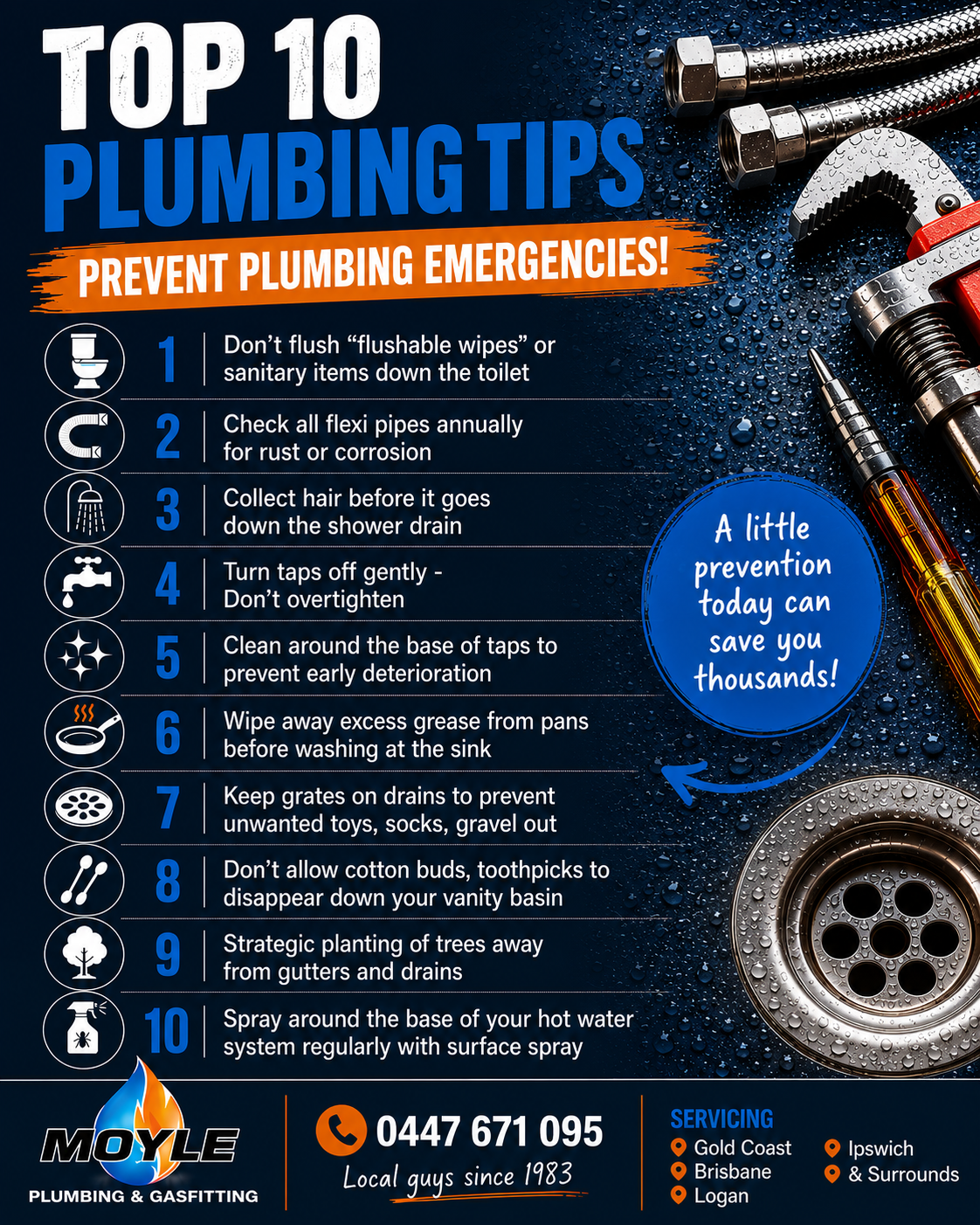
Moyle Plumbing’s Top 10 Plumbing Tips to Prevent a Plumbing Emergency
1. Only Flush Toilet Paper
Despite the wording on the packaging, so-called “flushable wipes” do not break down as quickly as toilet paper and can contribute to serious drain blockages.
Avoid flushing wipes, sanitary products, paper towels, cotton buds or other household items. Only human waste and toilet paper should be flushed down the toilet.
2. Check Flexible Braided Hoses Annually
Flexible braided hoses are commonly found beneath kitchen sinks, bathroom vanities and toilets. Over time, they can rust, corrode, bulge or split.
Check your flexible hoses regularly for:
Rust or discolouration
Fraying or broken braiding
Bulges in the hose
Moisture around the connections
Signs of corrosion
A failed flexible hose can release a large amount of water very quickly and cause extensive damage. Contact a licensed plumber if you notice any deterioration.
3. Stop Hair Entering the Shower Drain
Hair, soap residue and personal care products can gradually build up inside shower drains.
Use a removable hair catcher or drain strainer and clean it regularly. This simple habit can reduce unpleasant odours, slow-draining showers and avoidable drain blockages.
4. Turn Taps Off Gently
Taps do not need to be overtightened to stop the water.
Regularly forcing taps closed can damage washers, seals and other internal components, leading to leaking or difficult-to-use taps. Turn the tap until the water stops, without applying excessive pressure.
5. Keep the Base of Taps Clean
Water, cleaning products and grime can collect around the base of kitchen and bathroom taps.
Regularly wipe these areas clean and dry to help reduce corrosion and deterioration. Also watch for moisture returning around the base, as this may indicate a leak or damaged seal.
6. Keep Cooking Grease Out of the Sink
Cooking oil, fat and grease should not be washed down the kitchen sink.
Although grease may enter the drain as a liquid, it can cool and harden inside the pipework. It then traps food scraps and other debris, eventually contributing to a blocked kitchen drain.
Wipe excess grease from pans with paper towel and place it in the rubbish before washing the pan.
7. Keep Grates Over Outdoor Drains
Outdoor drain grates help prevent toys, leaves, gravel, soil and other debris from entering stormwater and drainage pipes.
Replace damaged or missing grates and regularly clear leaves and garden debris from around them, particularly before forecast heavy rain.
8. Keep Small Items Away From Vanity Drains
Cotton buds, dental floss, toothpicks, jewellery and other small objects can easily disappear down a bathroom basin.
Use the basin plug or cover the drain when handling small items. Never push objects further into the pipe if something falls into the drain, as this may make removal more difficult.
9. Plant Trees Away From Drains and Gutters
Tree roots naturally seek out moisture and may enter damaged or cracked underground drainage pipes.
Before planting large trees, consider the mature size of the root system and its proximity to sewer lines, stormwater drains, gutters and underground plumbing.
Regular gutter cleaning and sensible landscaping can also help prevent stormwater overflows and drainage problems.
Plumbing Prevention for Rental Properties
Property managers and landlords can use these tips as part of regular property inspections and preventative maintenance.
Checking flexible hoses, leaking toilets, taps, drains, hot water systems and outdoor drainage can help identify small problems before they become emergency repairs or cause significant damage to the property.
Tenants should also know where the property’s water meter is located and how to turn off the water supply during an emergency.
Helpful Hints ~
Need Help With a Plumbing Problem?
Preventative maintenance can reduce the risk of a plumbing emergency, but some problems still require professional attention.
Moyle Plumbing & Gasfitting provides plumbing maintenance, blocked drain clearing, leak repairs, hot water services and emergency plumbing assistance throughout the Gold Coast, Logan, Brisbane South, Ipswich and surrounding areas.
If you notice a leaking tap, rusted flexible hose, slow drain, unusual water usage or another plumbing concern, arrange an inspection before the issue becomes more expensive.
Call Moyle Plumbing & Gasfitting on 0447 671 095 or contact our team to book a licensed plumber.
This guide was created by the team at Moyle Plumbing & Gasfitting. As local maintenance plumbers servicing Logan City for more than 30 years, we've attended thousands of plumbing emergencies and believe homeowners should have access to practical advice that can help minimise property damage before a plumber arrives.